As the saying goes, close only counts in horseshoes. “Close” should not describe the rigor of a clean-in-place (CIP) program of a major cheese production plant.
Unfortunately, this cheese plant had issues with its CIP program insufficiently getting equipment clean. The caustic wash used by the plant was insufficient to meet its sterility needs, resulting in cheese that at times either needed to be degraded (and sold at a lower price) or thrown away.
The cheese plant engaged a technical team from Anderson Chemical to review its current CIP program and identify opportunities for improvement. Anderson was engaged based on its familiarity with this plant’s operations, and its several years of CIP and food production experience.
NEW ONE-STEP CAUSTIC WASH FROM ANDERSON
After examining the plant’s production and CIP processes, the Anderson team identified needed operational enhancements and a critical cleaning change, using a one-step caustic wash with a chlorine adjunct and acid sanitizer.
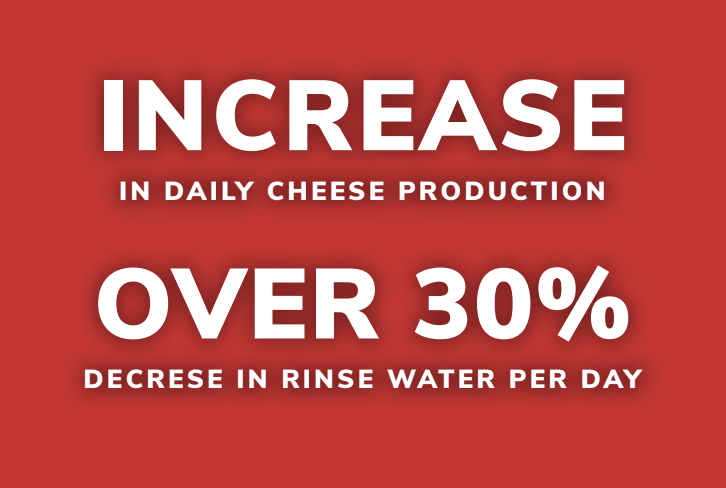
The plant’s new one-step caustic wash, a proprietary formula from Anderson tailored to meet the plant’s specific protein and mineral removal needs, was a big change from the plant’s prior caustic wash, which could not be combined with chlorine. With the new Anderson caustic wash, not only were plant personnel now able to complete their CIP program in less time, using fewer steps, but the plant also reduced its rinse water use by more than 30% each day.


Our Results
PLANT CLEANLINESS AND PRODUCTIVITY INCREASES
Due to Anderson’s operational and CIP program recommendations, the plant improved its cleanliness, and reduced its caustic, water and labor costs. This in turn enabled the plant to increase its daily cheese production, increasing company revenue.
A plant production manager commented on Anderson’s engagement: “We had been struggling to meet cleaning standards under our
prior CIP program. Anderson’s expertise, and new one-step caustic wash, boosted our plant’s productivity and made it easier for our personnel to focus on cheese-making versus technical operational issues.”